Understanding the weight of a gallon of water might seem simple, but it’s more important than most people realize.
Whether you’re cooking, baking, tracking hydration, or conducting science experiments, knowing how much a gallon of water weighs ensures accuracy and efficiency.
Many people assume a gallon always weighs exactly 8 pounds, but this depends on whether you’re using a US gallon or an Imperial (UK) gallon, as well as factors like water temperature and density.
In addition, knowing water weight is essential in fields like engineering, plumbing, and even fitness, where liquid measurements matter.
In this article, we’ll explore the exact gallon water weight, compare US and UK gallons, explain how temperature affects water’s density, and provide practical tips for measuring and converting water accurately.
By the end, you’ll have a complete understanding of how much water weighs per gallon and why it matters in everyday life.
Understanding the Gallon
Before calculating the weight of a gallon of water, it’s important to understand what a gallon actually is. A gallon is a unit of volume used primarily in the United States and the United Kingdom, but the size differs depending on the system. The US gallon is defined as 128 US fluid ounces, which is approximately 3.785 liters. On the other hand, the Imperial (UK) gallon is larger, equal to 160 UK fluid ounces, or about 4.546 liters. This difference may seem small, but it has a noticeable effect on the weight of water per gallon.
Historically, the gallon has been used for measuring liquids like milk, fuel, and water. The US system and the Imperial system developed separately, which is why their gallon sizes are not identical. When people talk about water weighing 8 pounds per gallon, they are referring specifically to a US gallon at standard temperature.
Understanding the type of gallon you are working with is essential for accurate calculations in cooking, hydration tracking, or scientific experiments. For instance, using a UK gallon instead of a US gallon will result in a slightly heavier measurement of water. In addition, water density can vary slightly with temperature, so the exact weight of a gallon of water may differ in hot versus cold conditions. Knowing these details ensures precision whenever you need to measure or convert gallons of water.
Exact Weight of a Gallon of Water
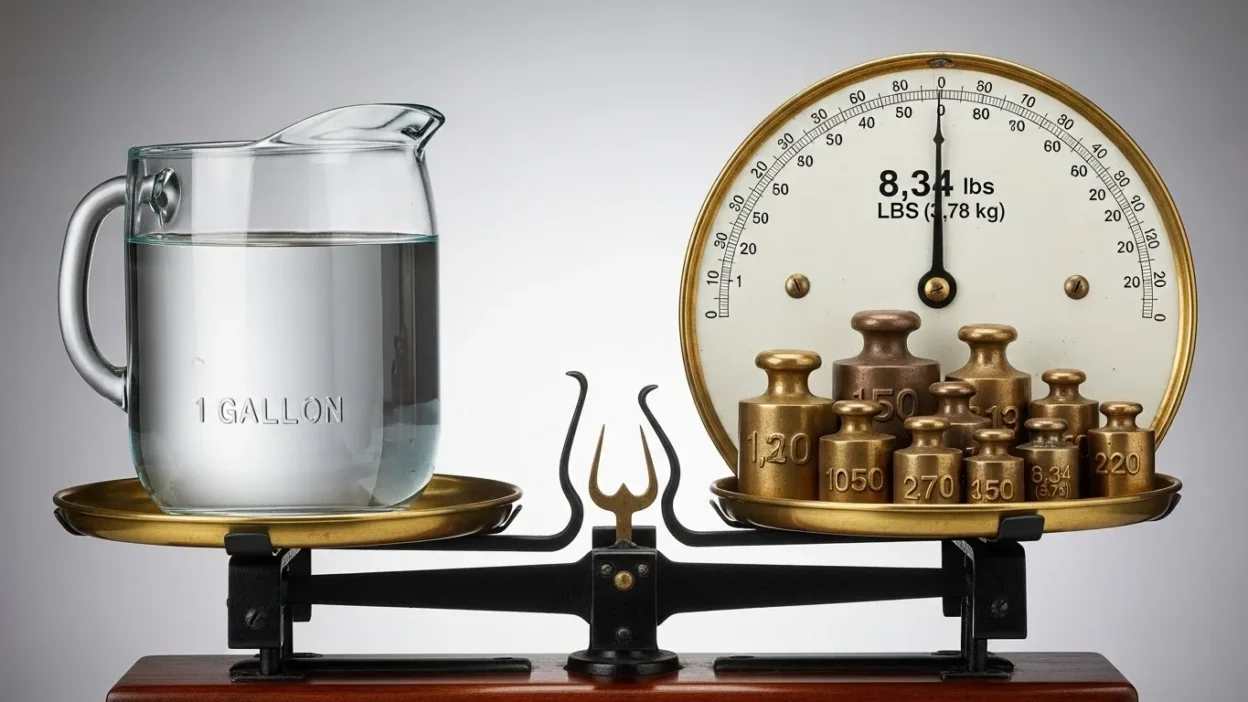
Now that we understand what a gallon is, let’s look at the weight of a gallon of water. In the United States, one US gallon of water weighs approximately 8.34 pounds (about 3.78 kilograms) at room temperature, which is typically around 68°F (20°C). This figure is commonly rounded to 8 pounds in casual conversation, but for precise measurements, especially in science and engineering, the exact weight matters.
For the Imperial (UK) gallon, the weight is slightly higher due to its larger volume. One UK gallon of water weighs about 10.02 pounds (4.54 kilograms) at room temperature. This difference is important to note when converting recipes, measuring liquids for experiments, or comparing water storage capacities between countries.
Water density also affects weight. Cold water is slightly denser than warm water, meaning a gallon of very cold water can weigh slightly more than 8.34 pounds, while warm water may weigh a little less. While these differences are usually small, they can matter in precise scientific calculations or large-scale water measurements.
Understanding the gallon water weight helps with accurate conversions, whether you are measuring in pounds, kilograms, or liters. It also clarifies common misconceptions, like assuming a gallon always weighs exactly 8 pounds. By keeping in mind the type of gallon, temperature, and water density, you can measure water accurately for cooking, science, or everyday use.
Factors Affecting the Weight of Water
While the standard weight of a gallon of water is widely known, several factors can slightly alter the weight of a gallon of water in practice. One of the most important is temperature. Water is densest at around 39°F (4°C), meaning a gallon of very cold water weighs slightly more than at room temperature. Conversely, warm water is less dense, so a gallon may weigh a little less. This effect is usually minor but can be significant in scientific experiments or large-scale water calculations.
Another factor is the presence of impurities or dissolved minerals. Pure distilled water has a consistent weight, but tap water, mineral water, or other liquids containing salts or minerals can be slightly heavier. For example, seawater is denser than freshwater, so a gallon of seawater weighs more than a gallon of pure water.
Even altitude and pressure can have subtle effects on water weight, though these are generally negligible for everyday use. When water freezes into ice, it becomes less dense, so a gallon of ice occupies more space but weighs the same in mass.
Understanding these factors is essential when precise measurements are needed, whether in cooking, hydration tracking, engineering, or scientific applications. Knowing that water’s weight can vary slightly depending on temperature, purity, and state ensures that you can make accurate conversions and measurements whenever you need to calculate the gallon water weight for practical or scientific purposes.
Conversions and Comparisons
Understanding the weight of a gallon of water is easier when you can convert it into different units. In the US, one gallon of water equals 128 US fluid ounces or approximately 3.785 liters. In the UK, an Imperial gallon is 160 UK fluid ounces, which is about 4.546 liters. These differences highlight why it’s essential to know which gallon you’re using, especially when converting recipes, measuring liquids for experiments, or calculating water weight for storage.
For practical purposes, one US gallon of water weighs about 8.34 pounds (3.78 kilograms), while one UK gallon weighs roughly 10.02 pounds (4.54 kilograms). Converting these weights to ounces or grams can be useful for precise measurements. For instance, a US gallon equals 133.4 ounces or 3,785 grams, and a UK gallon equals 160.3 ounces or 4,546 grams.
Quick conversion formulas make these calculations easier:
- Pounds to kilograms: multiply pounds by 0.4536
- Kilograms to pounds: multiply kilograms by 2.2046
- Gallons to liters: multiply US gallons by 3.785, UK gallons by 4.546
Creating a conversion table for water weight helps in cooking, fitness, or science projects. Whether you need to know the weight of water in liters, ounces, or kilograms, understanding these conversions ensures accuracy and avoids mistakes. By mastering these comparisons, you can confidently measure, store, or use water for any purpose, knowing exactly how much a gallon weighs in any unit.
Practical Applications of Knowing Water Weight
Knowing the weight of a gallon of water is useful in many aspects of everyday life, from cooking to science. In the kitchen, accurate water measurements are crucial for recipes that require precise liquid quantities. For instance, baking relies on exact ratios, and knowing that one US gallon weighs about 8.34 pounds ensures that ingredients are balanced correctly. Similarly, for large-scale food preparation or beverage production, understanding water weight prevents errors and ensures consistency.
In fitness and hydration tracking, water weight is equally important. Athletes and individuals monitoring their daily water intake can convert gallons into pounds or liters to track consumption more precisely. For example, someone consuming half a gallon of water is ingesting roughly 4.17 pounds (1.89 kilograms) of water, which can help with hydration goals and health planning.
Engineers, plumbers, and scientists also rely on the weight of water per gallon for practical calculations. When designing water storage tanks, plumbing systems, or conducting experiments, knowing the exact weight prevents structural issues and ensures accuracy. Even in everyday tasks like moving or lifting containers of water, understanding the weight helps prevent overloading and injuries.
By knowing the exact gallon water weight, you can make informed decisions in a variety of contexts, whether it’s cooking, staying hydrated, conducting science experiments, or planning large-scale water storage. This knowledge is simple yet powerful, making everyday tasks more accurate and efficient.
How to Measure Water Accurately at Home
Measuring the weight of a gallon of water at home doesn’t have to be complicated. The key is understanding the tools available and using them correctly. One of the simplest methods is using a kitchen scale. Place an empty container on the scale, zero it out (tare), and then fill it with water. Since a US gallon weighs approximately 8.34 pounds (3.78 kilograms), you can easily track how much water you’ve added. For UK gallons, remember the weight is around 10.02 pounds (4.54 kilograms).
Another method is using measuring cups or jugs marked in gallons, liters, or ounces. While these don’t give weight directly, knowing the volume allows you to calculate the weight using the standard conversion formulas: multiply gallons by 8.34 pounds for US gallons or 10.02 pounds for UK gallons.
For larger quantities, like filling water tanks or containers, a flow meter or graduated container can help measure volume precisely, which can then be converted into weight. Always consider water temperature: colder water is slightly denser, meaning a gallon may weigh a little more, while warm water weighs slightly less.
By combining the right tools and conversion knowledge, you can accurately measure the weight of water per gallon at home for cooking, hydration, experiments, or even DIY projects. Precision ensures your recipes turn out right, your hydration goals are met, and your measurements are reliable in any situation.
Common Myths and Misconceptions
When it comes to the weight of a gallon of water, there are several common myths that often confuse people. One of the most widespread misconceptions is that a gallon of water always weighs exactly 8 pounds. While this is approximately true for a US gallon at room temperature, the exact weight is 8.34 pounds (3.78 kilograms). For a UK (Imperial) gallon, the weight is even higher at around 10.02 pounds (4.54 kilograms). Relying on the “8 pounds” rule can lead to inaccuracies in cooking, science experiments, or large-scale measurements.
Another myth is that temperature doesn’t affect water weight. In reality, water is densest at around 39°F (4°C), so colder water weighs slightly more than warm water. Although the difference is small, it can matter for precise scientific calculations or engineering projects.
Some people also assume that all gallons are the same worldwide, but the US and UK gallons differ in volume, which directly affects the weight of water. Ignoring this difference can cause mistakes in recipes, conversions, or international projects.
Finally, there is a misconception that impurities or minerals don’t affect weight. Tap water, mineral water, or seawater is denser than pure distilled water, making a gallon slightly heavier depending on its composition.
By understanding these myths and clarifying the facts about gallon water weight, you can make accurate measurements, avoid errors, and better apply water weight knowledge in everyday life, cooking, and scientific contexts.
FAQs About the Weight of a Gallon of Water
1. How much does a gallon of water weigh?
A US gallon of water weighs about 8.34 pounds (3.78 kilograms) at room temperature, while a UK (Imperial) gallon weighs approximately 10.02 pounds (4.54 kilograms).
2. Does water weigh more when cold?
Yes, water is densest at around 39°F (4°C), so cold water is slightly heavier than warm water. The difference is small but can matter in precise calculations.
3. Is a gallon always 8 pounds?
Not exactly. The 8-pound figure is a rounded approximation for a US gallon at room temperature. Exact weight is 8.34 pounds for a US gallon and 10.02 pounds for a UK gallon.
4. How do I convert gallons to liters?
One US gallon equals 3.785 liters, and one UK gallon equals 4.546 liters. Multiply the number of gallons by these values to get liters.
5. Can the weight of water affect cooking or baking?
Absolutely. Accurate water measurements are essential in baking and cooking because liquid ratios affect texture, consistency, and outcomes. Knowing the weight of water per gallon helps prevent mistakes.
6. How can I measure water weight at home?
Use a kitchen scale for precision. Place a container on the scale, zero it out, and fill it with water. Knowing that a US gallon weighs about 8.34 pounds allows you to track the exact amount.
7. Does mineral content change water weight?
Yes, tap water or mineral water can weigh slightly more than pure distilled water due to dissolved minerals, which increase density.
These FAQs clarify the most common questions about gallon water weight and ensure accurate, practical knowledge for everyday use.
Conclusion
Understanding the weight of a gallon of water is more important than it might first appear.
If for cooking, baking, hydration tracking, engineering, or scientific experiments, knowing exactly how much a gallon of water weighs ensures accuracy and prevents mistakes.
A US gallon weighs approximately 8.34 pounds (3.78 kilograms), while a UK (Imperial) gallon is about 10.02 pounds (4.54 kilograms).
Small differences in temperature, water density, and mineral content can slightly affect these weights, making precision important in certain contexts.
By learning how to measure water accurately at home using kitchen scales, measuring jugs, or conversion formulas, you can confidently apply this knowledge in practical situations.
For instance, converting gallons to liters or ounces becomes simple, and you can ensure recipes, experiments, or hydration tracking are precise.
Understanding common myths—like assuming a gallon always weighs exactly 8 pounds—helps avoid confusion and reinforces accurate measurement practices.
Ultimately, knowing the gallon water weight empowers you in everyday life and specialized tasks alike.
From ensuring your baked goods turn out perfectly to accurately calculating liquid loads for storage or fitness tracking, this simple piece of knowledge has wide-ranging practical applications.
By keeping in mind the type of gallon, temperature, and water composition, you can measure and use water more effectively than ever before.
With this guide, you now have a complete understanding of how much a gallon of water weighs and why it matters, making your daily tasks and scientific calculations more precise and reliable.

I am Romeo, the mind behind buzzpuns.com, where every joke has a spark and every pun creates a buzz.
I am here to turn everyday words into laugh-worthy puns that stick in your mind.
I am building a fun space where humor meets creativity one clever pun at a time 😄